
Recipe Details
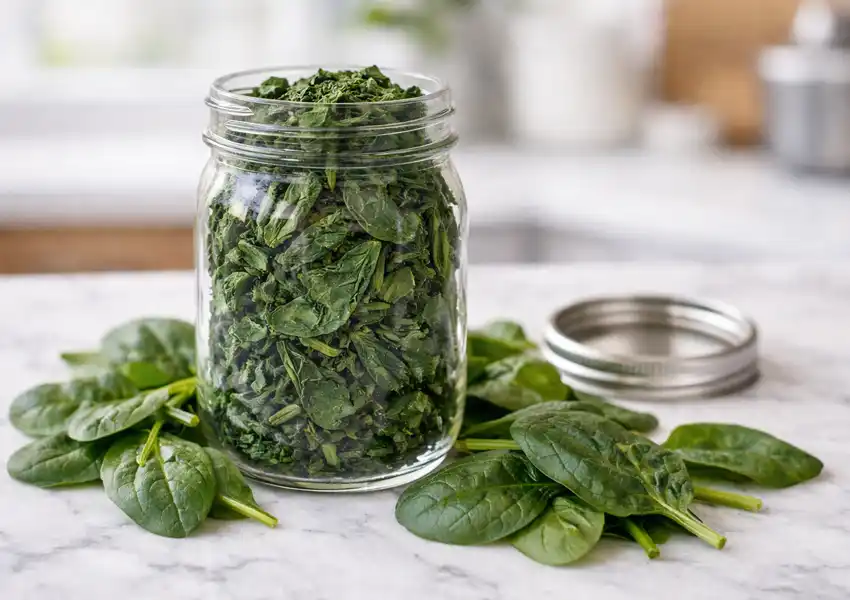
Dehydrated spinach is a lightweight leafy green that works well in many backpacking meals. When dried properly, spinach becomes brittle and compact while still retaining much of its flavour and nutritional value.
Prep Time
5min
Cook Time
5h
Wait Time
15min
| Characteristic | Details |
|---|---|
| Difficulty: | Super easy |
| Cost: | Cheap |
| Category: | Dehydrated Ingredients |
| Seasons: | All |
Ingredients
Ingredients & Servings: Easily customize your meal with our adjustable servings slider. The ingredient list dynamically updates, ensuring perfect portions for your camping adventure, whether solo or with a group.
Ingredients
| 1 Container | Baby Spinach (pre-washed) |
Dehydrated Spinach Directions
Because fresh spinach contains a large amount of water, dehydration dramatically reduces its volume and weight. A large handful of fresh leaves quickly shrinks into a small amount of dried spinach that can easily be added to soups, noodle dishes, rice meals, and trail breakfasts.
This recipe explains how to prepare and dehydrate spinach so it stores well and can be used as a convenient vegetable ingredient in backcountry cooking.
Step 1:
Use fresh spinach leaves that are clean and free from damage. In this batch, pre-washed organic baby spinach was used.
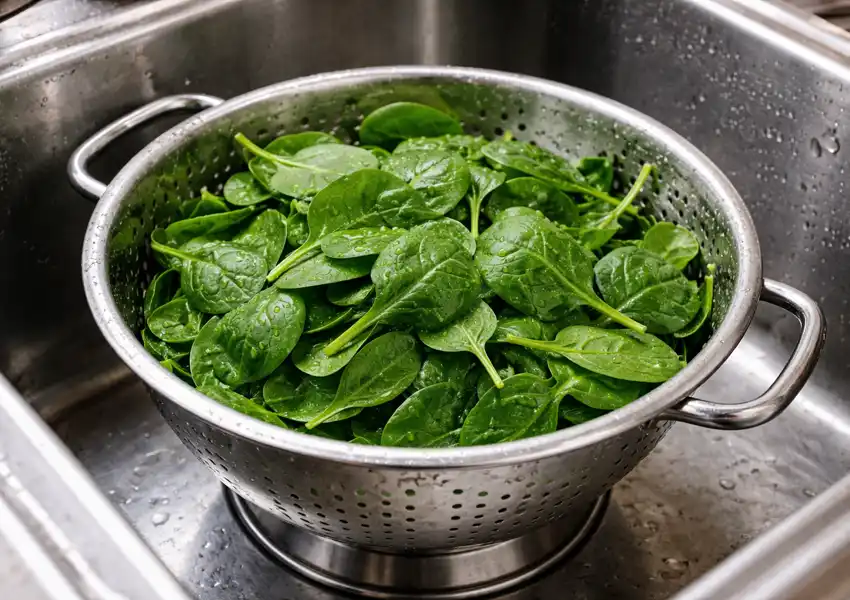
The spinach came from a 312 g (11 oz) container of fresh baby spinach.
Step 2:
If using pre-washed spinach, no additional washing is required. If using garden or loose spinach, rinse thoroughly and dry the leaves well before dehydrating.
Step 3:
Spread the spinach across the dehydrator trays with silicon mesh liners. Spinach leaves do not need to be perfectly spaced and can be loosely stacked because they shrink rapidly once drying begins.
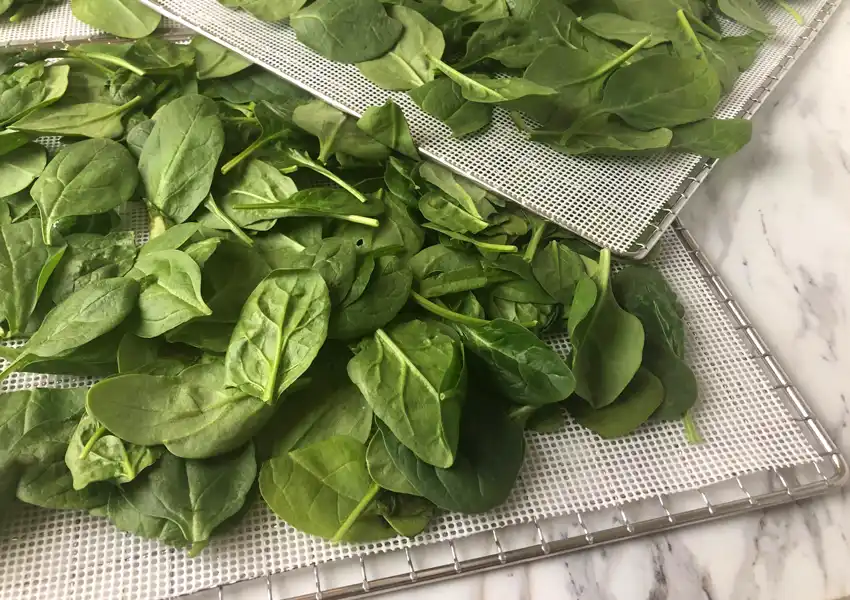
Avoid creating thick mounds so air can circulate the leaves.
Step 4:
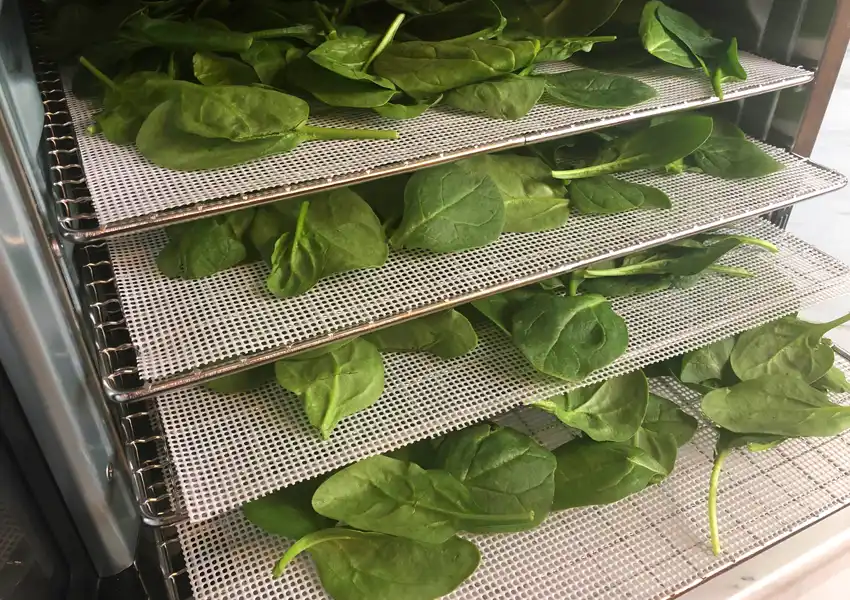
Set the dehydrator temperature to 100°F (38°C). Drying at a lower temperature can help preserve more nutrients in delicate leafy greens.
Step 5:
Dry the spinach until the leaves become completely brittle and crumble easily when crushed. Depending on humidity and airflow, this typically takes 6-8 hours.
Step 6:
Allow the dried spinach to cool completely at room temperature before storing it.
Store the spinach in airtight containers or vacuum-sealed bags in a cool, dark location.
Recipe Notes
- Batch size
This batch used one container of baby spinach weighing 312 g (11 oz) before dehydration. - Washing
Pre-washed baby spinach sold in sealed containers can generally be used without additional washing. If using spinach from a garden or loose bundles from the store, rinse the leaves thoroughly to remove dirt or grit before dehydrating. - Finished yield
After dehydrating, the spinach weighed 30 g (1.1 oz). - Water removed
A total of 282 g of water was removed during dehydration. - Number of servings
Serving sizes are based on the fresh equivalent weight. One serving is approximately 85 g of fresh spinach, which is roughly 2.5 cups of raw spinach or about ½ cup of cooked spinach. This batch produces about 4 servings. - Dried serving size
Each serving equals approximately 7 g of dried spinach. - Rehydration
The spinach has a rehydration ratio of approximately 9.4:1. Each serving requires about 70 g of water (roughly ⅓ cup) to rehydrate fully. In most trail meals, the spinach can be added directly to hot soups or noodle dishes during cooking. - Tray loading
Spinach leaves can be loosely stacked on dehydrator trays because they shrink dramatically during the first stages of dehydration. Avoid creating thick piles so airflow can reach all leaves. - Dehydrator setup
This batch was dehydrated with silicone mesh liners, where the spinach from one container filled about five trays before drying. - Drying time
The spinach was dried for approximately 8 hours. The temperature was set to 130°F during the drying process to finish the batch efficiently. - Using dehydrated spinach in trail meals
Dried spinach works well in soups, ramen, rice dishes, pasta meals, couscous dishes, and backpacking breakfasts such as egg scrambles. - Storage
Store dehydrated spinach in airtight containers or vacuum-sealed bags in a cool, dark location. Properly dried spinach stores well for several months and even longer if kept in the freezer. - Further reading
Ultimate Guide to Dehydrating Food for Backpacking
Nutrition facts
Serving size 8 grams vegetarian Vegan gluten free lactose free
Per Serving
| Kcal: | 20 kcal |
| Fibers (g): | 2g |
| Sodium (mg): | 65mg |
| Carbs: | 3g |
| Sugar (g): | 0.3g |
| Fat: | 2g |
| Proteins: | 2g |