
Recipe Details
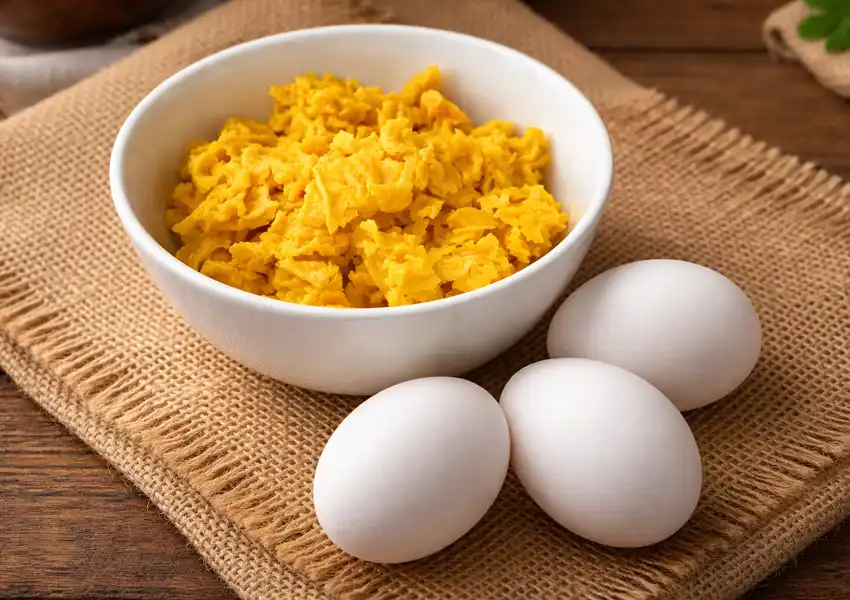
Dehydrated scrambled eggs are a lightweight protein ingredient that can be rehydrated quickly for use in backcountry meals without requiring additional cooking. Because the eggs are fully cooked before dehydration, they function similarly to freeze-dried egg inclusions used in commercial backpacking meals.
Prep Time
20min
Cook Time
8h
Wait Time
15min
| Characteristic | Details |
|---|---|
| Difficulty: | Super easy |
| Cost: | Fairly Low Cost |
| Category: | Dehydrated Ingredients |
| Seasons: | All |
Dehydrated Scrambled Eggs Directions
This ingredient works well in breakfast skillet meals, wraps, fried rice, couscous dishes, ramen-style meals, and other recipes where cooked egg pieces are added during rehydration.
This recipe explains how to cook, dry, and store scrambled eggs so they rehydrate reliably for short-term backpacking food preparation.
Step 1:
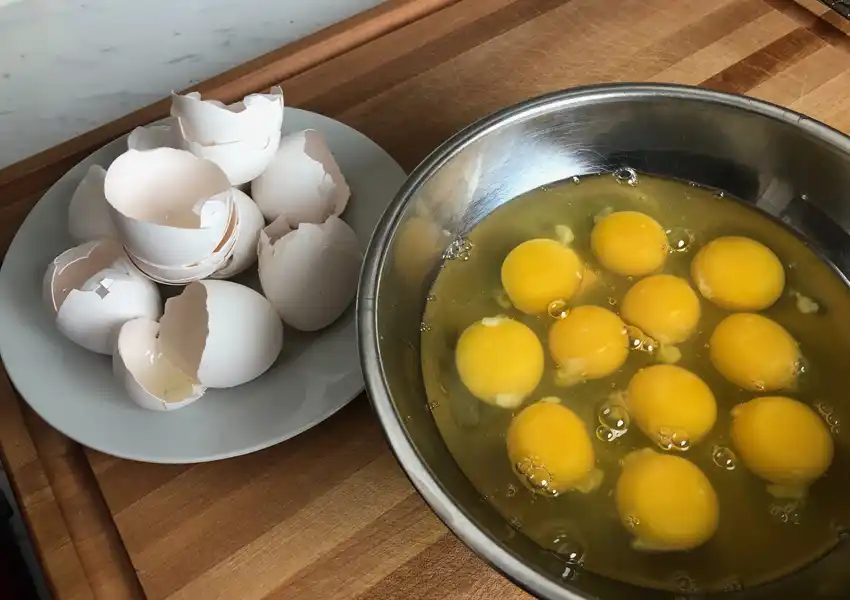
Crack whole eggs into a bowl and whisk (or use a blender on low speed) until the yolks and whites are fully combined.
Step 2:
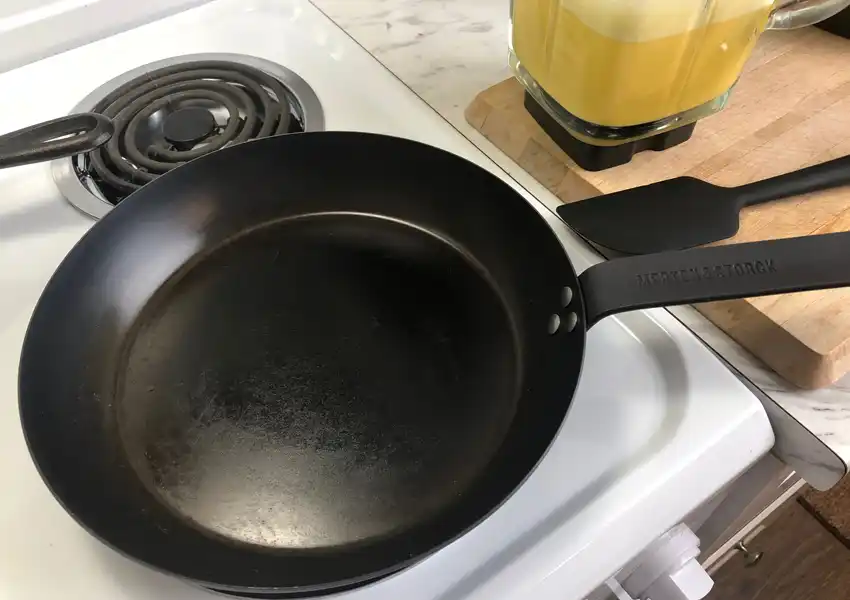
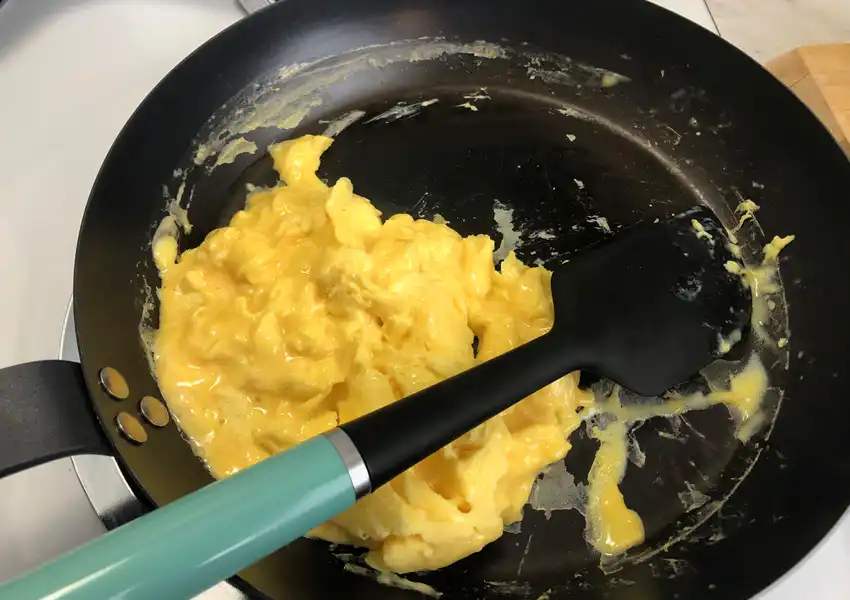
Cook the eggs in a non-stick pan (or a well-seasoned cast iron or carbon steel pan) over low to medium heat without adding oil, butter, or milk.
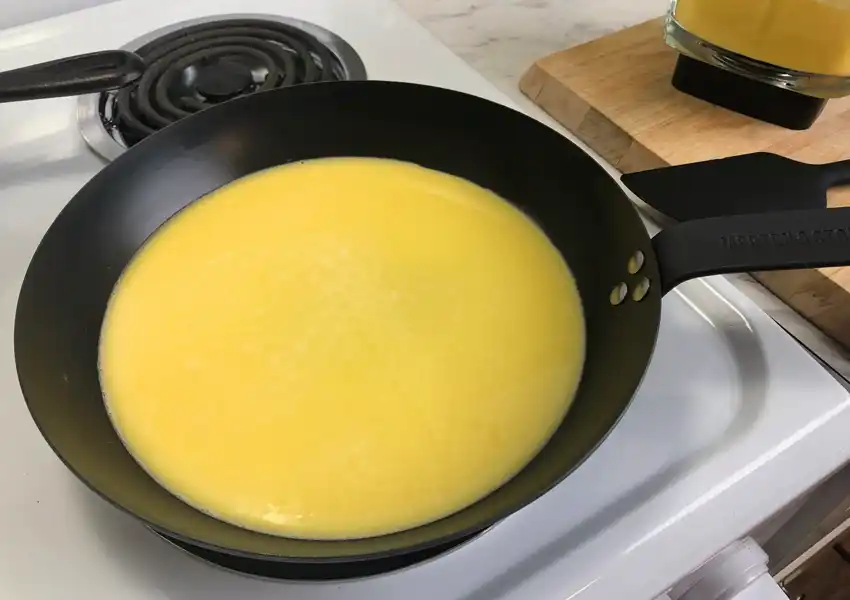
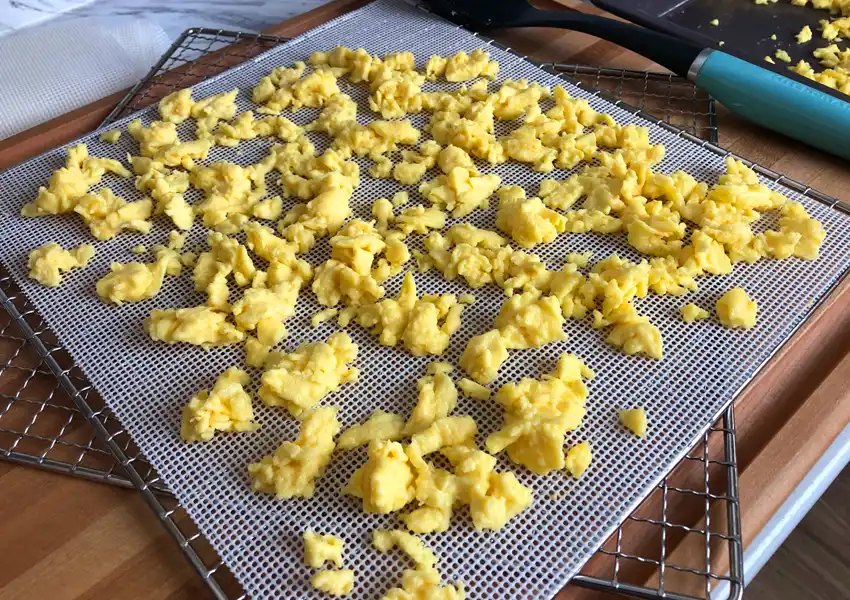
Stir frequently to create small, uniform curds that will dry evenly.
Step 3:
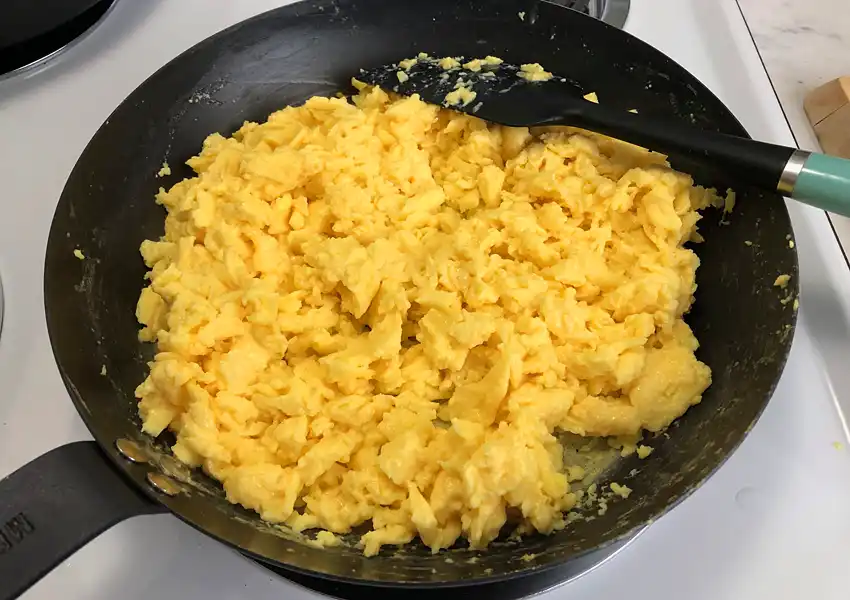
Cook until the eggs are fully set with no visible liquid remaining, but avoid overbrowning.
Step 4:
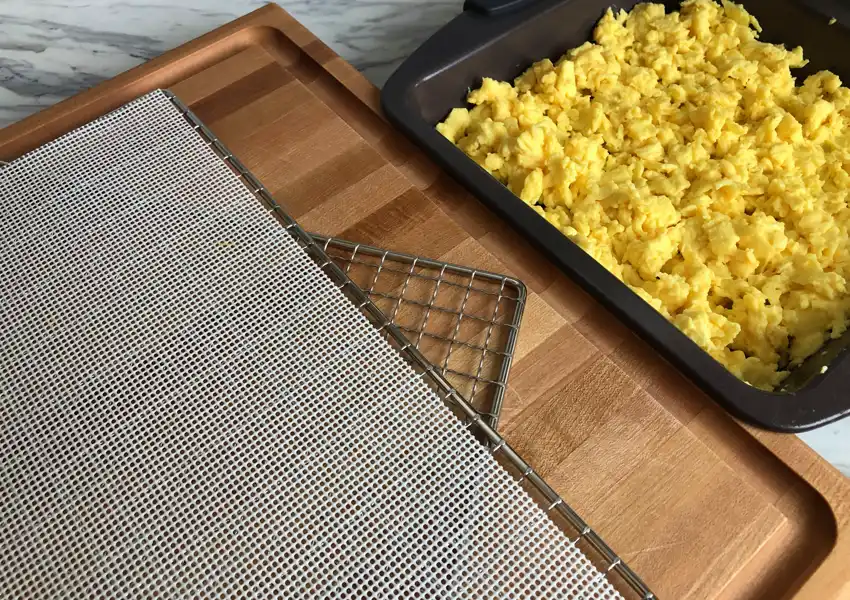
Allow the scrambled eggs to cool slightly before spreading them in a single layer on dehydrator trays with silicone mesh sheets.
Step 5:
Dry at 145–150°F (63–66°C).
Step 6:
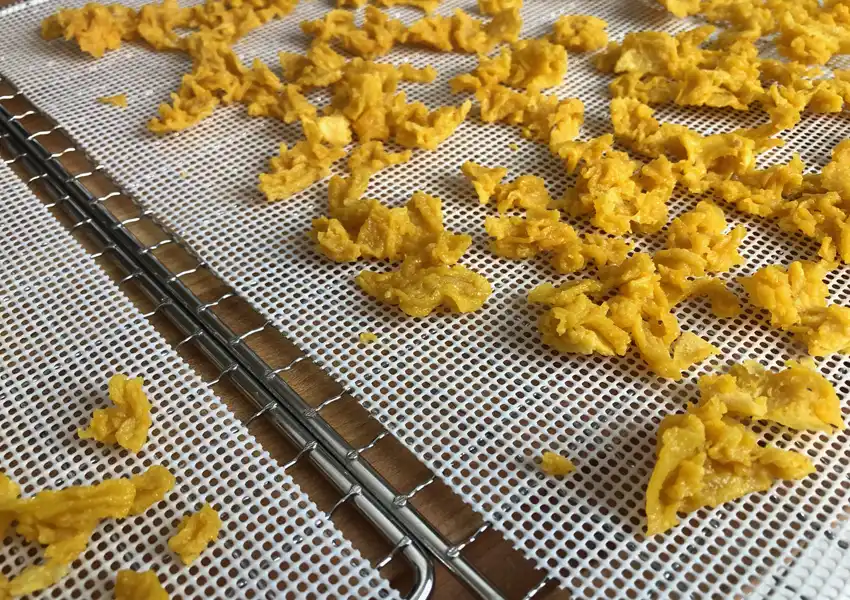
Dry for approximately 6–10 hours until the egg pieces become firm and crumbly with no remaining internal moisture. This batch required approximately 8 hours.
Step 7:
Allow the dried eggs to cool completely before packaging to prevent condensation during storage.
Step 8:
Store in airtight containers or vacuum-sealed bags with an oxygen absorber packet until needed.
Recipe Notes
- Batch size
This batch used approximately 610 g of whole eggs after removing shells. - Cooked weight
After scrambling, the eggs weighed approximately 540 g before dehydration. - Finished yield
After dehydrating, the scrambled eggs weighed 150 g (5.3 oz). - Water removed during cooking
Approximately 70 g of water was released during the scrambling process. - Water removed during dehydration
A total of 390 g of water was removed during dehydration. - Number of servings
Serving sizes are based on the fresh equivalent weight. One serving equals approximately 2 large eggs (100 g). This batch provides about 6 servings. - Dried serving size
Each serving equals approximately 25 g of dried scrambled eggs. - Rehydration
Each serving requires approximately 65 g of water (about 4 tablespoons) during meal preparation. - Preparation method notes
Cook eggs without added fats or dairy to improve drying performance and storage stability. Smaller curd sizes dry more evenly and rehydrate more consistently. - Usage suggestions
Use in breakfast skillet meals, wraps, couscous dishes, ramen-style meals, rice dishes, and other recipes that include cooked egg pieces. - Storage
For best quality, store in airtight containers or vacuum-sealed bags, including an oxygen absorber packet, and use within a short preparation window before trips. - Further reading
Ultimate Guide to Dehydrating Food for Backpacking
Nutrition facts
Serving size 25 grams gluten free lactose free
Per Serving
| Kcal: | 143 kcal |
| Sodium (mg): | 142mg |
| Carbs: | 1g |
| Sugar (g): | 1g |
| Fat: | 10g |
| Cholesterol: | 372mg |
| Proteins: | 12g |