

Recipe Details
Dehydrated whole egg powder is a lightweight protein ingredient that allows fresh-style scrambled eggs to be prepared in the backcountry without refrigeration. When properly dried and stored for short-term trip use, powdered eggs rehydrate quickly and cook similarly to fresh eggs.
Prep Time
10min
Cook Time
10h
Wait Time
15min
| Characteristic | Details |
|---|---|
| Difficulty: | Easy |
| Cost: | Fairly Low Cost |
| Category: | Dehydrated Ingredients |
| Seasons: | All |
Ingredients
Ingredients & Servings: Easily customize your meal with our adjustable servings slider. The ingredient list dynamically updates, ensuring perfect portions for your camping adventure, whether solo or with a group.
Eggs
| 1 Dozen | Large Eggs |
Dehydrated Powdered Eggs Directions
This ingredient works well for trail breakfasts such as scrambled eggs, omelettes, breakfast wraps, and skillet meals. It can also be used as a binding ingredient in some backcountry baking recipes.
This recipe explains how to blend, dry, and condition whole eggs into powder for reliable short-term backpacking use.
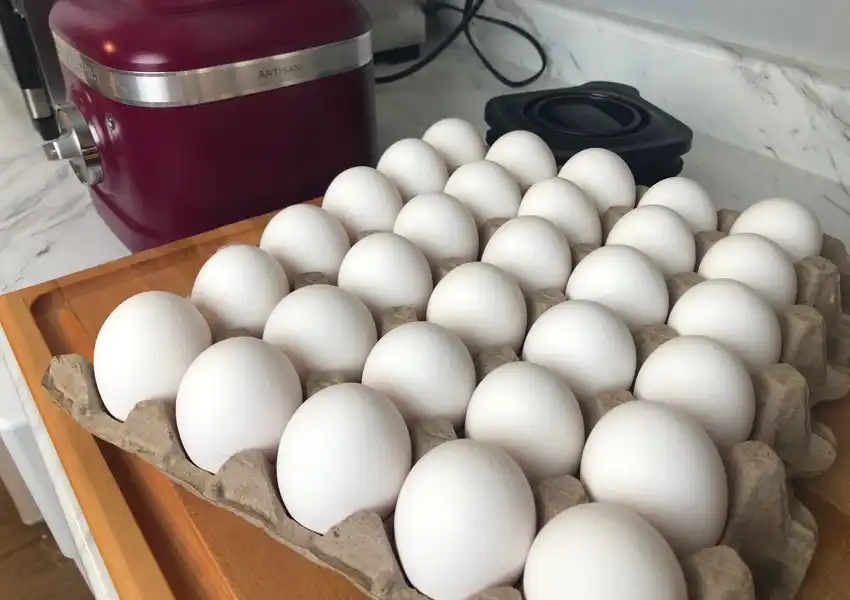
Step 1:
Crack whole eggs into a bowl to make it easier to catch pieces of shell, and then pour the eggs into a blender and blend on low speed until the yolks and whites are fully combined.
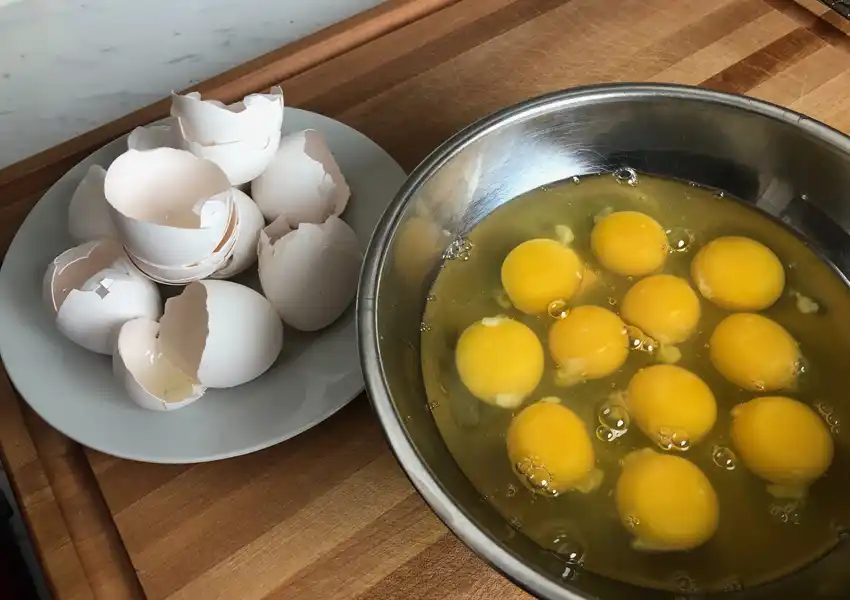
Step 2:
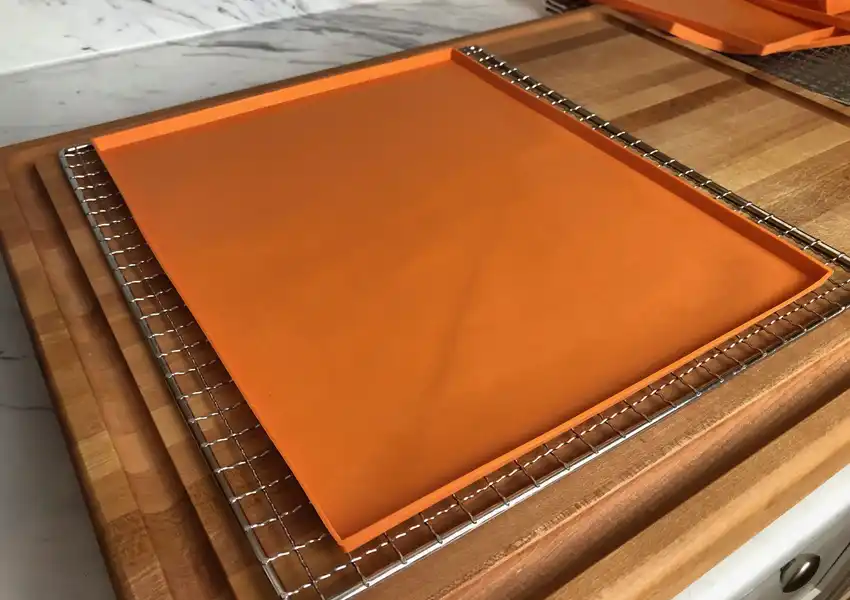
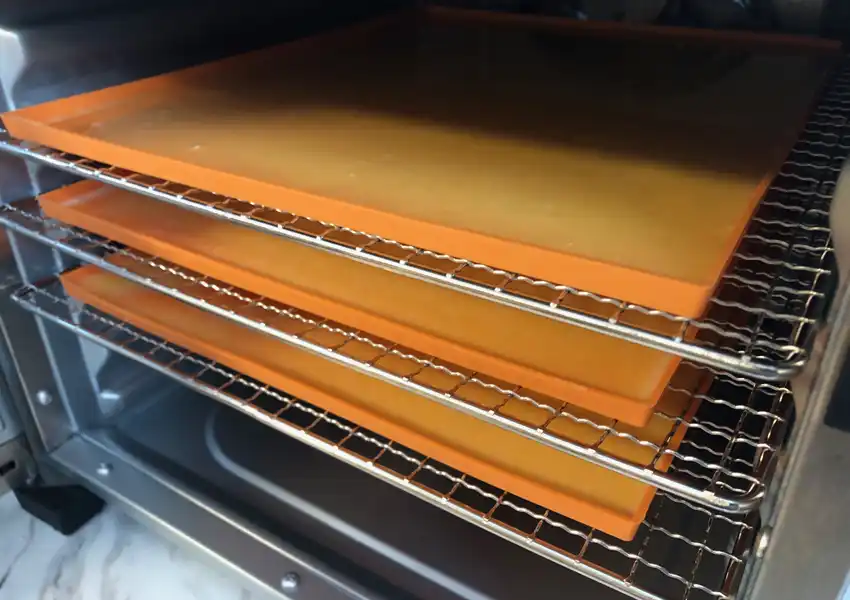
Pour the blended eggs evenly onto silicone fruit leather trays.
Spread into a thin uniform layer to support even drying.
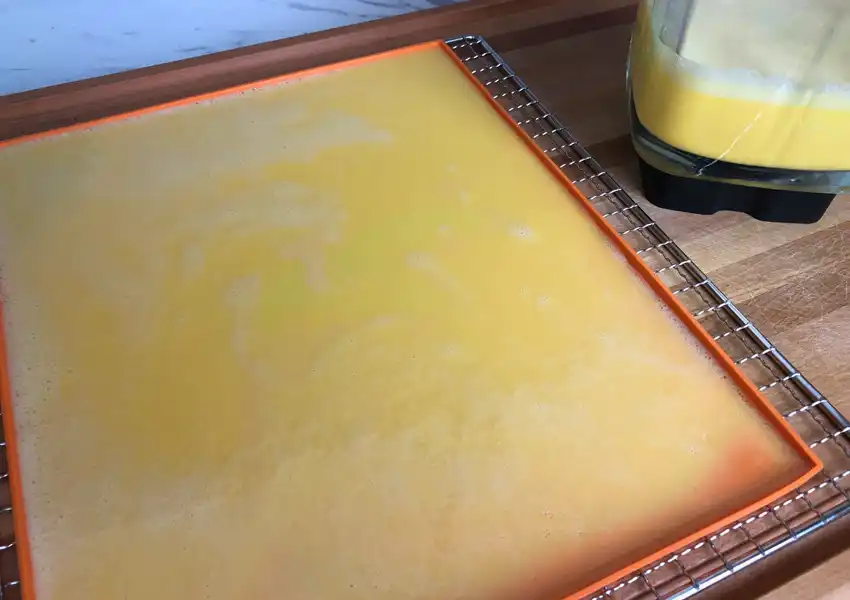
Step 3:
Place trays into the dehydrator and dry at 147°F (64°C).
Step 4:
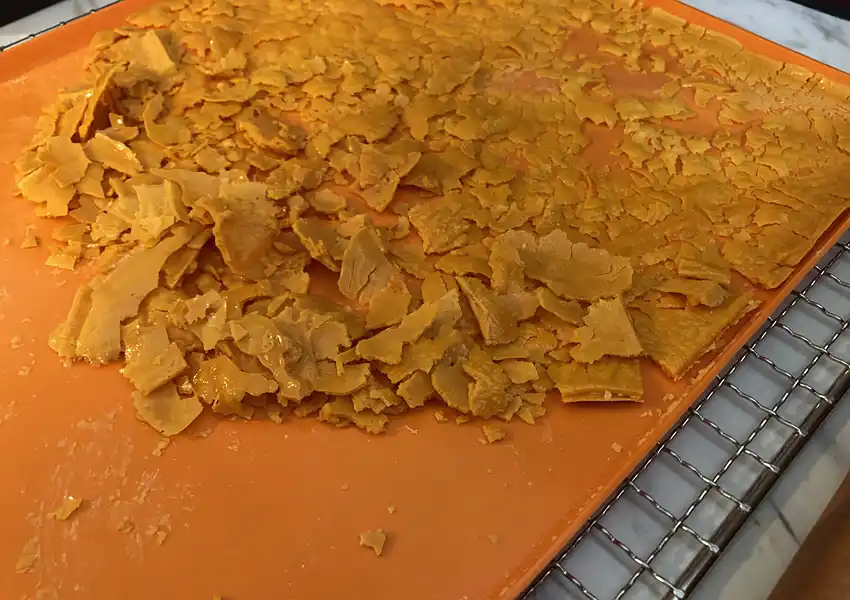
Dry until the egg sheets become completely brittle with no soft or flexible areas remaining.
Step 5:
Allow the dried egg sheets to cool fully before handling.
Step 6:
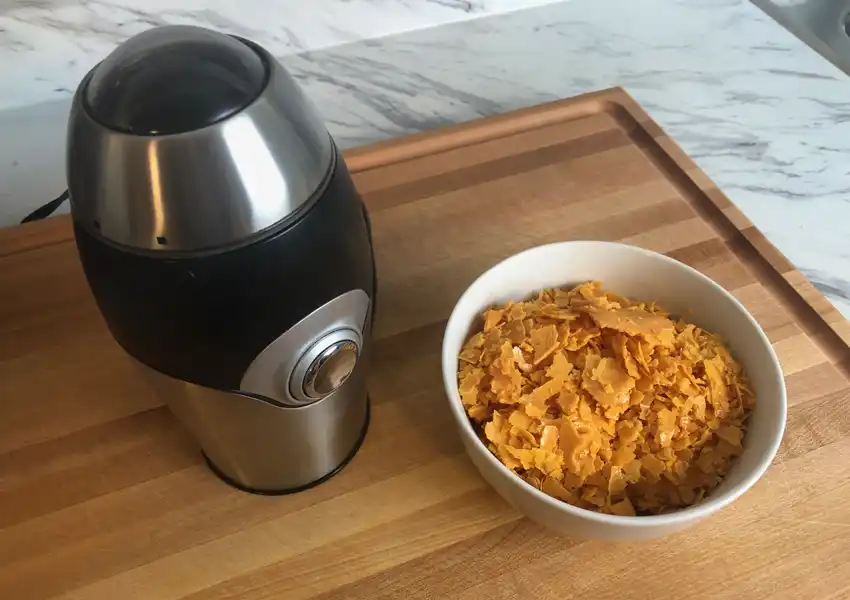
Break the dried egg sheets into pieces and grind into powder using a blender or spice grinder.
Step 7:
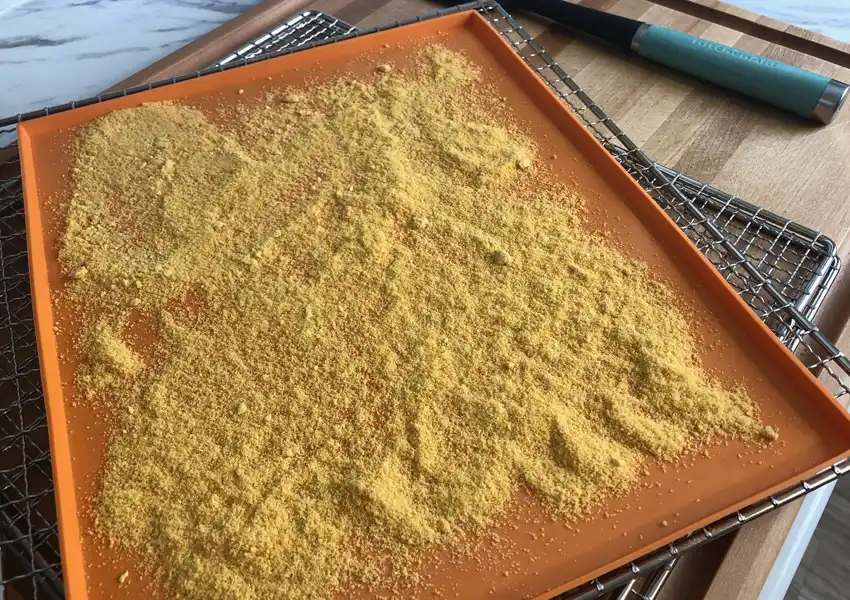
Return the powdered eggs to the dehydrator and dry at 145–150°F (63–66°C) for an additional 2 hours to remove residual moisture introduced during grinding.
Step 8:
Allow the egg powder to cool completely before packaging to prevent condensation during storage.
Step 9:
Store the egg powder in airtight containers or vacuum-sealed bags until needed, and include an oxygen absorber.
Recipe Notes
- Batch size
This batch used approximately 610 g of blended whole eggs after removing shells. - Finished yield
After dehydrating and conditioning, the egg powder weighed 137 g (4.8 oz). - Water removed
A total of 473 g of water was removed during the dehydration process. - Number of servings
Serving sizes are based on the fresh equivalent weight. One serving equals approximately 2 large eggs (100 g). This batch provides about 6 servings. - Dried serving size
Each serving equals approximately 23 g (about 3 tbsp) of dried egg powder. - Rehydration
Each serving requires approximately 79 g of water (about 5 tablespoons) before cooking. - Preparation method notes
Returning the egg powder to the dehydrator after grinding helps remove residual moisture introduced during processing and improves short-term storage stability. Some minor weight loss may occur due to powder adhesion to silicone trays during this conditioning step. - Usage suggestions
Use for scrambled eggs, omelettes, breakfast wraps, skillet meals, and some backcountry baking applications. - Storage
Store in airtight containers or vacuum-sealed bags and use within a short preparation window before trips. Adding an oxygen absorber can improve storage stability by reducing oxidation and moisture exposure. - Sanitation note
When working with raw eggs, sanitize preparation surfaces, blender components, and dehydrator trays before use. See the Sanitizing Equipment for Home Food Dehydration guide for recommended bleach solution preparation. - Further reading
Ultimate Guide to Dehydrating Food for Backpacking
Nutrition facts
Serving size 3 tbsp gluten free lactose free
Per Serving
| Kcal: | 143 kcal |
| Sodium (mg): | 142mg |
| Carbs: | 1g |
| Sugar (g): | 1g |
| Fat: | 10g |
| Cholesterol: | 372mg |
| Proteins: | 12g |