
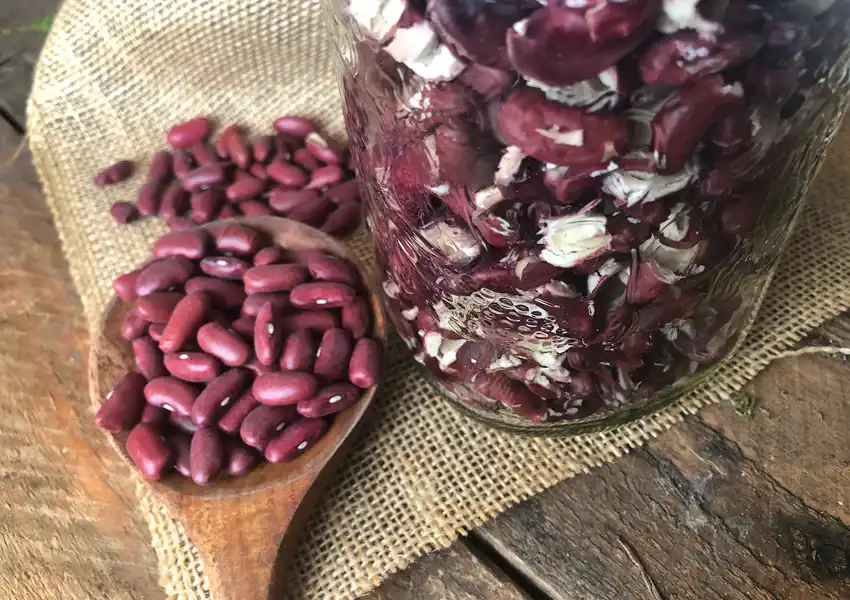
Recipe Details
Dehydrated red kidney beans are a lightweight protein ingredient that works well in many backpacking meals. Drying cooked beans removes most of their water while preserving their carbohydrates, protein, and fibre.
Prep Time
23h
Cook Time
3h 30min
Wait Time
15min
| Characteristic | Details |
|---|---|
| Difficulty: | Easy |
| Cost: | Cheap |
| Category: | Dehydrated Ingredients |
| Seasons: | All |
Ingredients
Ingredients & Servings: Easily customize your meal with our adjustable servings slider. The ingredient list dynamically updates, ensuring perfect portions for your camping adventure, whether solo or with a group.
Ingredients
| 2 cups | Dry Red Kidney Beans |
| 2 L | Cold water |
Dehydrated Kidney Beans Directions
Kidney beans are commonly used in trail meals such as chili, rice and bean dishes, soups, and burrito-style meals. When dehydrated properly, they store well and rehydrate reliably during backcountry cooking.
This recipe explains how to prepare dry red kidney beans by soaking, cooking, and dehydrating them so they can be used as a convenient ingredient in backpacking meals.
Step 1:
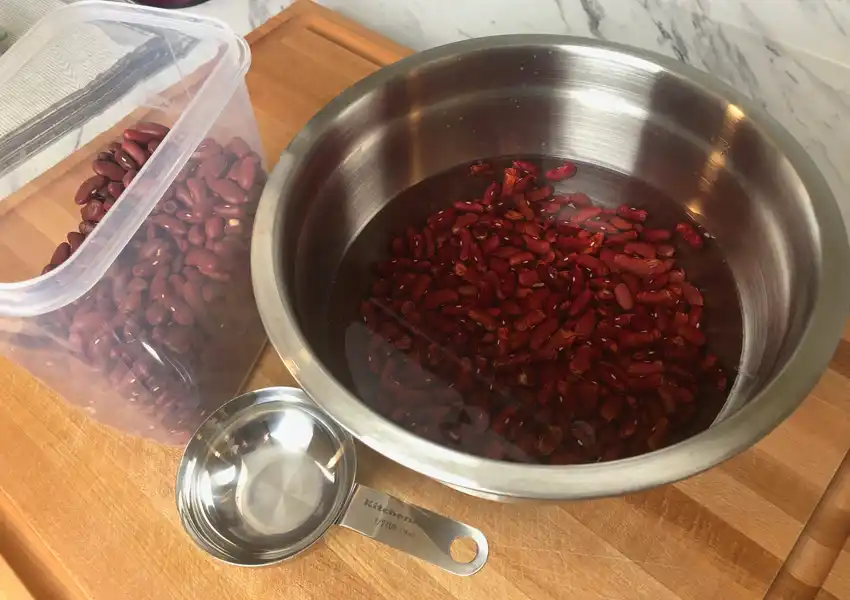
Measure 2 cups of dry red kidney beans and place them in a large bowl.
Step 2:
Add approximately 2 litres of cold water to the bowl and allow the beans to soak for about 24 hours. This soaking process helps soften the beans and reduces cooking time.
Step 3:
After soaking, drain and rinse the beans thoroughly under cold running water.
Step 4:
Transfer the soaked beans to a large pot and add about 2 litres of fresh water.
Step 5:
Bring the beans to a boil, then reduce the heat and simmer gently for 60–90 minutes. Cook the beans until they are almost tender but not mushy.

Step 6:
Drain the cooked beans and allow them to cool slightly before weighing them. This cooked weight will be used to calculate the final dehydration yield.
Step 7:
Spread the cooked beans evenly across the dehydrator trays in a single layer. Avoid stacking or clumping the beans so air can circulate freely around them.
Step 8:
Set the dehydrator temperature to approximately 130–135°F (55–57°C). Dry the beans until they become hard and fully dehydrated.
Drying typically takes 8–12 hours, depending on humidity and airflow.
Step 9:
Allow the beans to cool completely before storing them. Store the dried beans in airtight containers or vacuum-sealed bags in a cool, dark location.
Recipe Notes
- Batch size
This batch began with 2 cups of dry red kidney beans weighing 320 g (11.25 oz). - Cooked weight
After soaking for 24 hours and simmering for 60–90 minutes, the cooked beans weighed 700 g (25 oz). - Finished yield
After dehydrating, the beans weighed 325 g (11.5 oz). - Water absorbed during cooking
The beans absorbed approximately 380 g of water during soaking and cooking. - Water removed during dehydration
Approximately 375 g of water was removed during the dehydration process. - Number of servings
Serving sizes are based on the dry bean equivalent. One serving equals ¼ cup of dry kidney beans. This batch produces 8 servings. - Dried serving size
Each serving equals approximately 41 g of dried kidney beans. - Rehydration
The beans have a rehydration ratio of approximately 1.15:1. Each serving requires about 47 g of water (roughly 3 tablespoons) to fully rehydrate. In most backpacking meals, the beans can simply be added directly to the pot during cooking. - Drying time
The beans dried at approximately 130°F (55°C) and were fully dehydrated after about 3 hours. - Using dehydrated kidney beans in trail meals
Kidney beans work well in chili, rice-and-bean dishes, soups, burrito bowls, and other backpacking dinners. - Storage
Store dehydrated beans in airtight containers or vacuum-sealed bags in a cool, dark location. Properly dried beans typically store well for 6–12 months and longer if kept in the freezer. - Further reading
Ultimate Guide to Dehydrating Food for Backpacking
Nutrition facts
Serving size 40 grams vegetarian Vegan gluten free lactose free
Per Serving
| Kcal: | 110 kcal |
| Fibers (g): | 5g |
| Carbs: | 21g |
| Sugar (g): | 1g |
| Proteins: | 8g |