
Recipe Details
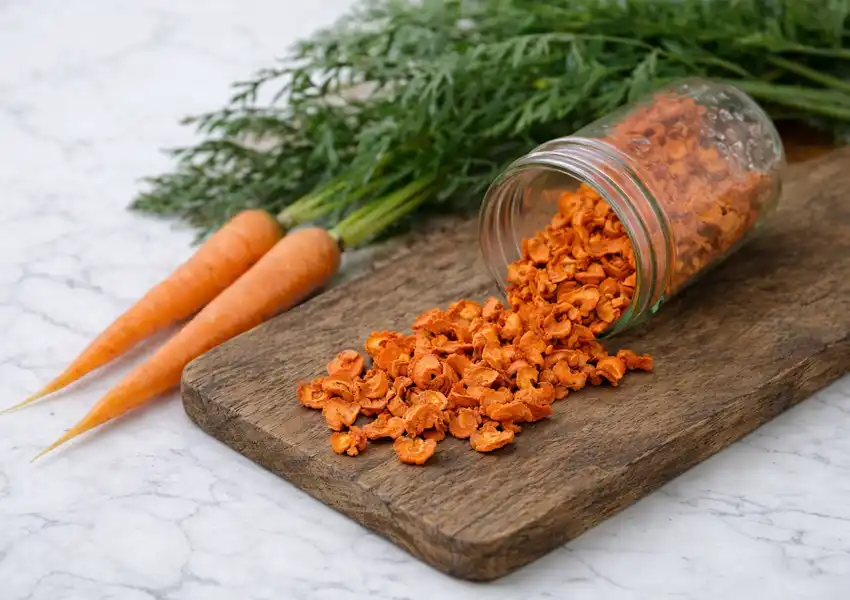
Dehydrated carrot coins are a durable vegetable ingredient for backpacking meals that benefit from more texture and structure. When sliced evenly, blanched, and dried properly, they store compactly and rehydrate well in soups, stews, rice dishes, and other simmered meals.
Prep Time
15min
Cook Time
7h
Wait Time
10min
| Characteristic | Details |
|---|---|
| Difficulty: | Super easy |
| Cost: | Cheap |
| Category: | Dehydrated Ingredients |
| Seasons: | All |
Ingredients
Ingredients & Servings: Easily customize your meal with our adjustable servings slider. The ingredient list dynamically updates, ensuring perfect portions for your camping adventure, whether solo or with a group.
Carrots
| 3 lbs | Carrots |
Dehydrated Carrots Directions
Compared with shredded carrots, carrot coins retain more shape after rehydration and are better suited to recipes where visible vegetable pieces are preferred. They work especially well in meals with longer cook or soak times.
This recipe explains how to prepare, blanch, and dehydrate carrot coins so they dry evenly, store well, and perform reliably in backcountry cooking.
Step 1:
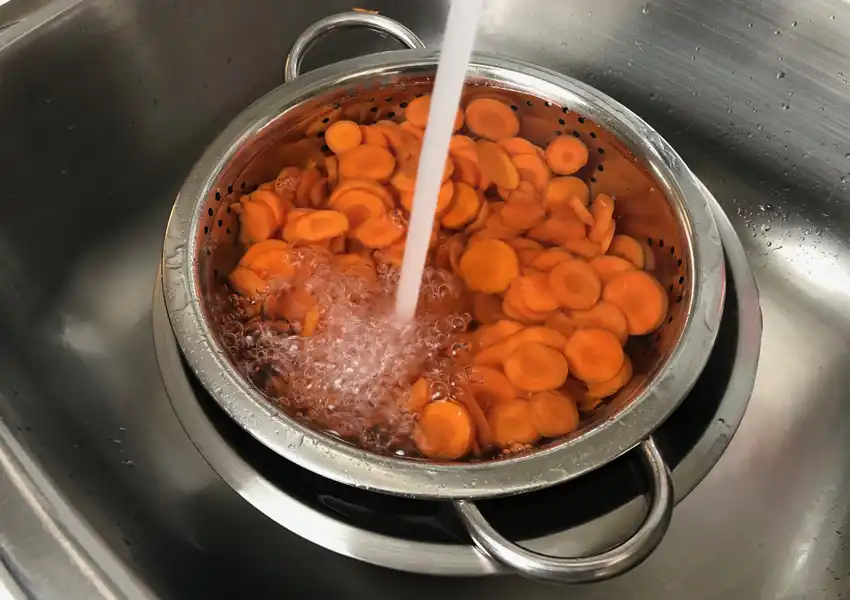
Wash the carrots thoroughly under cold running water to remove surface dirt.
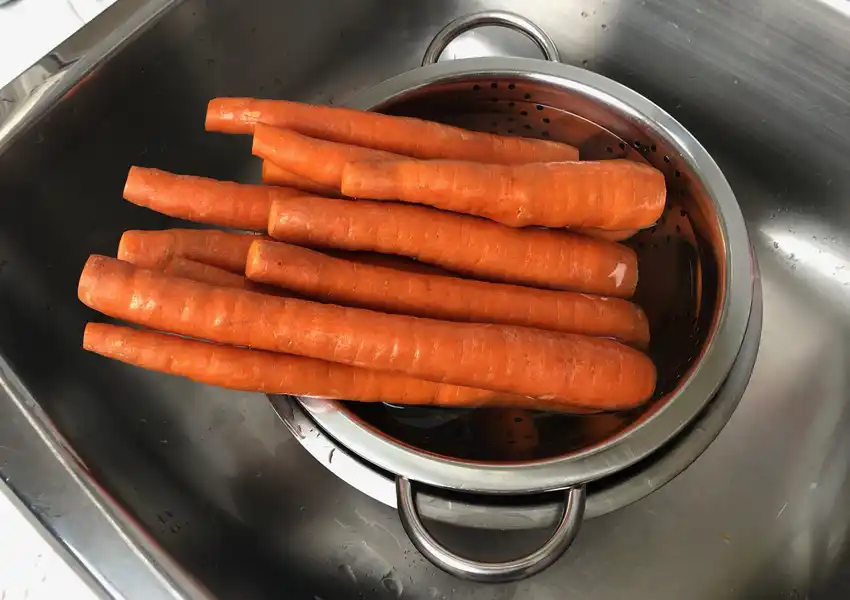
Trim both ends of each carrot. Peeling is optional but recommended if the carrots are very old. Leaving the peel on helps retain additional fibre and nutrients. For this batch, the peels were left on.
Step 2:
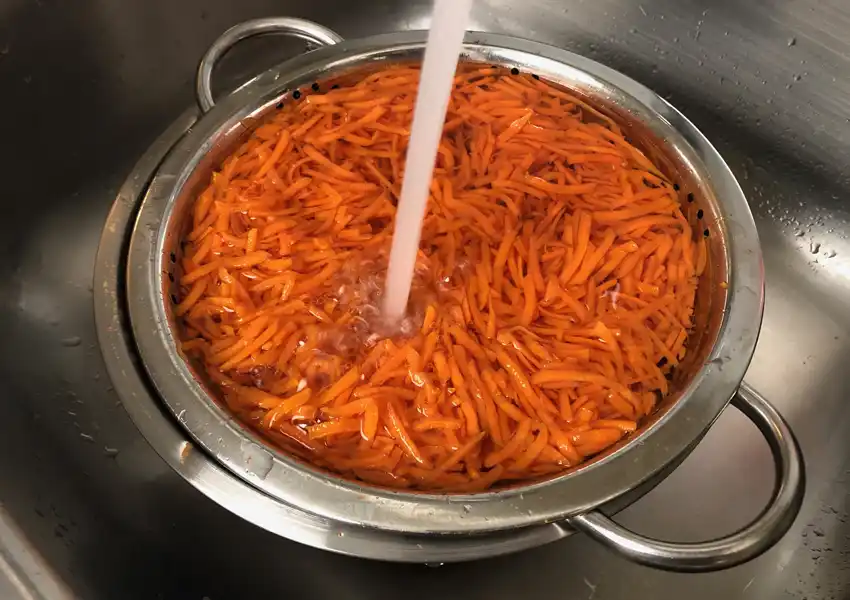
Slice the carrots into uniform coins approximately 1/8 inch thick. For shredded, use a grater or your grating attachment with a food processor.
Keeping the slices as even as possible helps them dry at the same rate and improves consistency during rehydration.
Step 3:
Optional but recommended: blanch the carrot coins for 2–3 minutes in boiling water.
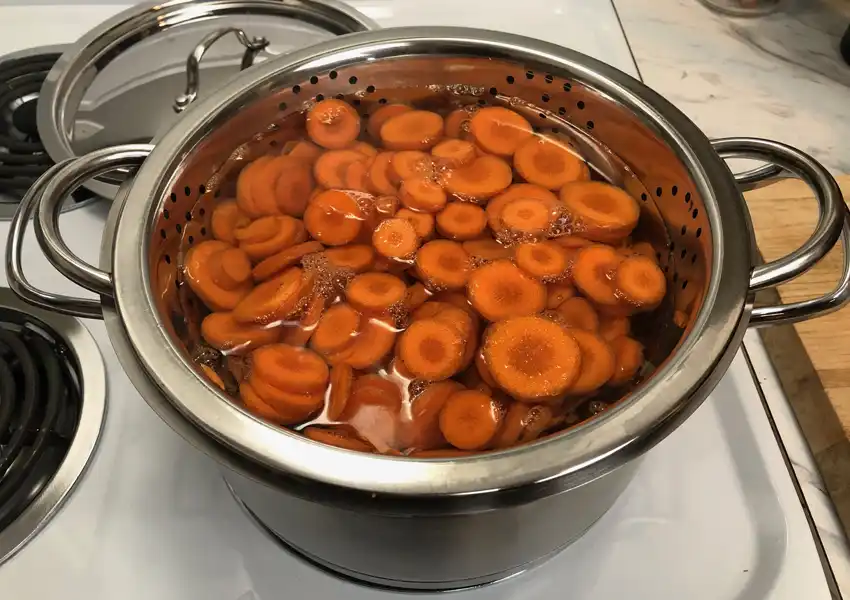
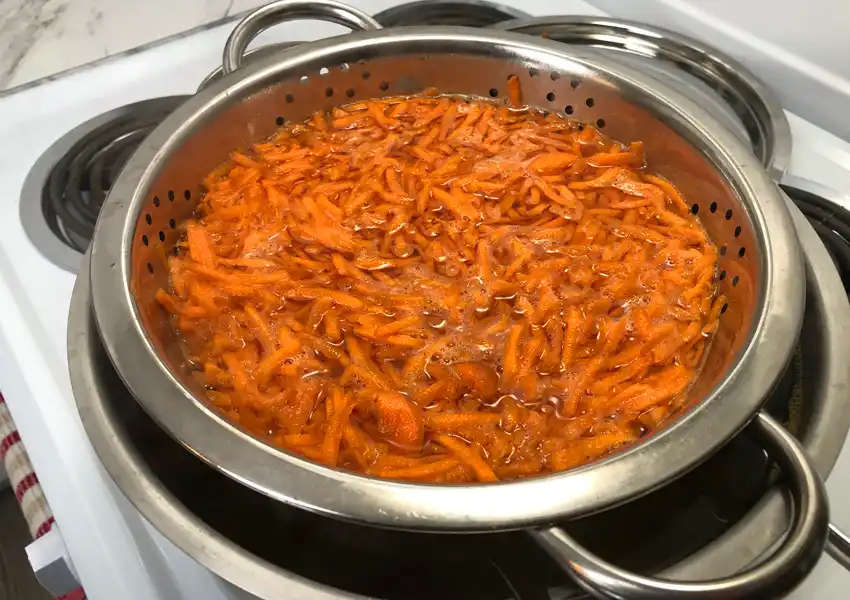
Immediately cool the carrots under cold running water or in an ice bath to stop the cooking process. Blanching helps preserve colour and improves rehydration performance after drying.
Step 4:
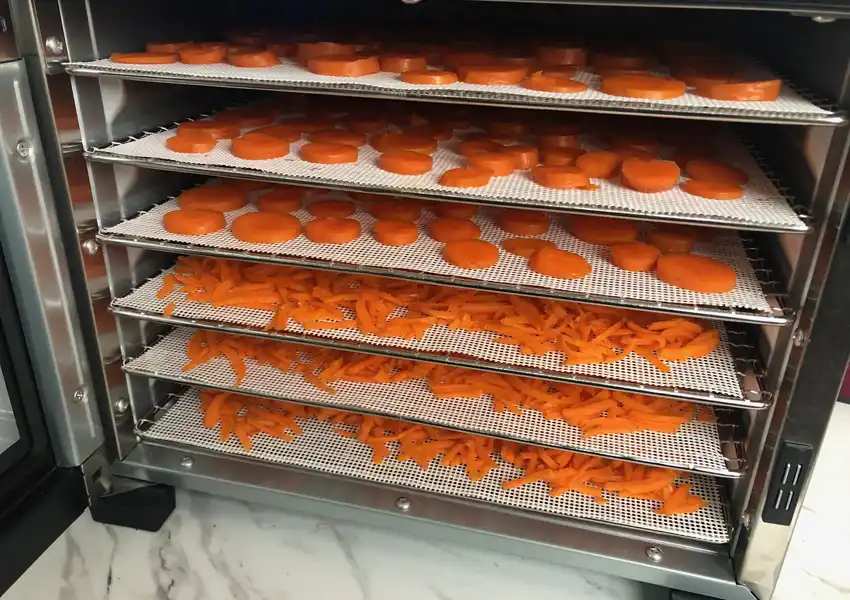
Arrange the carrot coins evenly on the dehydrator trays in a single layer.
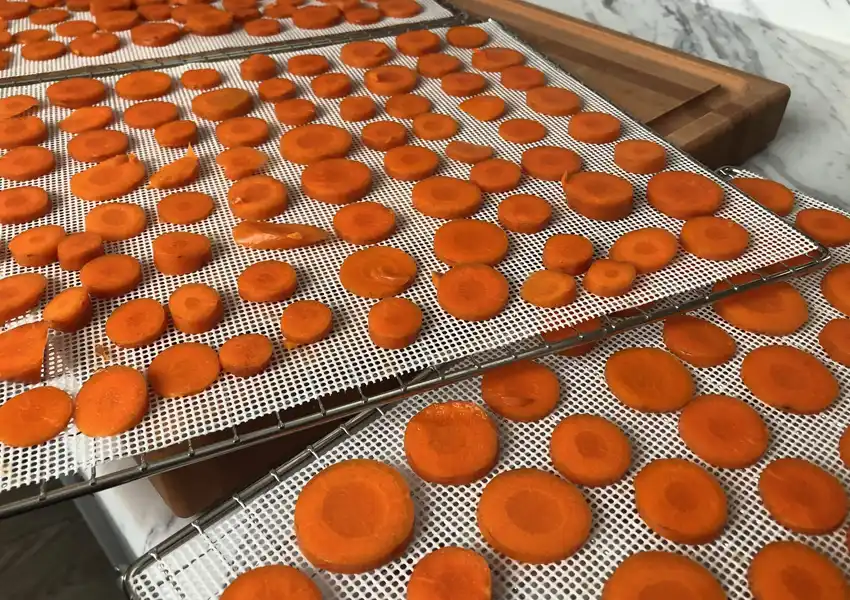
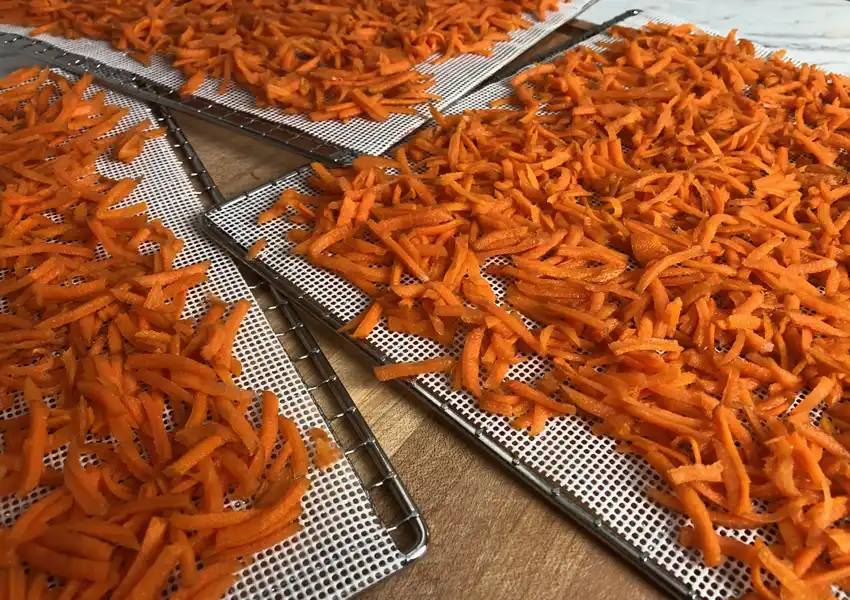
Avoid overlapping the pieces to maintain airflow and promote even drying.
Step 5:
Dry at 125°F (52°C) until fully dry.
In this batch, shredded carrots dried in approximately 5 hours, while carrot coins required approximately 9 hours. Drying time varies depending on slice thickness, tray loading, humidity, and dehydrator performance.
Step 6:
The carrot coins are fully dried when they are hard and brittle with no internal moisture remaining when broken or pressed.
Step 7:
Allow the dried carrot coins to cool completely at room temperature before packaging.
Step 8:
Store in airtight containers in a cool, dark location for long-term storage.
Recipe Notes
- Batch size
This batch used 1,248 g (2.75 lb) of prepared/trimmed carrots, split between carrot coins and shredded carrots. - Cooked weight
After blanching, the combined carrots weighed 1,285 g. - Finished yield
After dehydrating, the carrots weighed 110 g (3.9 oz). - Water absorbed
The carrots absorbed 37 g of water during blanching. - Water removed
A total of 1,175 g of water was removed during dehydration. - Number of servings
Serving sizes are based on the fresh equivalent weight. One serving equals approximately 1 medium carrot, or 78 g fresh carrot. - Dried serving size
Each serving equals approximately 7 g of dried carrots. - Rehydration
Each serving requires about 73 g of water. - Preparation method notes
Carrot coins retain more structure and are better suited to soups, stews, and rice dishes with longer cook times. Shredded carrots rehydrate faster and distribute more evenly in skillet meals, pasta sauces, couscous meals, and noodle dishes. - Usage suggestions
Use carrot coins when visible vegetable pieces are preferred. Use shredded carrots when faster rehydration or a more integrated texture is desired. - Storage
Store in airtight containers in a cool, dark location. Vacuum sealing is recommended for longer-term storage. - Further reading
Ultimate Guide to Dehydrating Food for Backpacking
Nutrition facts
Serving size 7 grams vegetarian Vegan
Per Serving
| Kcal: | 35 kcal |
| Fibers (g): | 2g |
| Sodium (mg): | 40mg |
| Carbs: | 8g |
| Sugar (g): | 5g |
| Proteins: | 1g |