

Recipe Details
Dehydrated bell peppers are a lightweight vegetable ingredient commonly used in backpacking meals. When dried properly, they retain their colour and flavor while taking up very little space in a food bag.
Prep Time
15min
Cook Time
14h
Wait Time
15min
| Characteristic | Details |
|---|---|
| Difficulty: | Easy |
| Cost: | Fairly Low Cost |
| Category: | Dehydrated Ingredients |
| Seasons: | All |
Ingredients
Ingredients & Servings: Easily customize your meal with our adjustable servings slider. The ingredient list dynamically updates, ensuring perfect portions for your camping adventure, whether solo or with a group.
Peppers
| 748 grams | Large bell peppers (4 peppers) |
Storage
Dehydrated Bell Peppers Directions
Dried peppers work well in trail meals such as rice dishes, pasta, soups, chili, and dehydrated skillet meals. Because peppers rehydrate quickly, they are especially useful in one-pot backpacking dinners where vegetables need to soften quickly while cooking.
This recipe explains how to prepare and dehydrate fresh bell peppers so they store well and rehydrate reliably for backcountry cooking.
Step 1:
Wash the bell peppers thoroughly under cold running water. Remove the stems and slice the peppers open. Cut away the white interior membranes and remove the seeds.
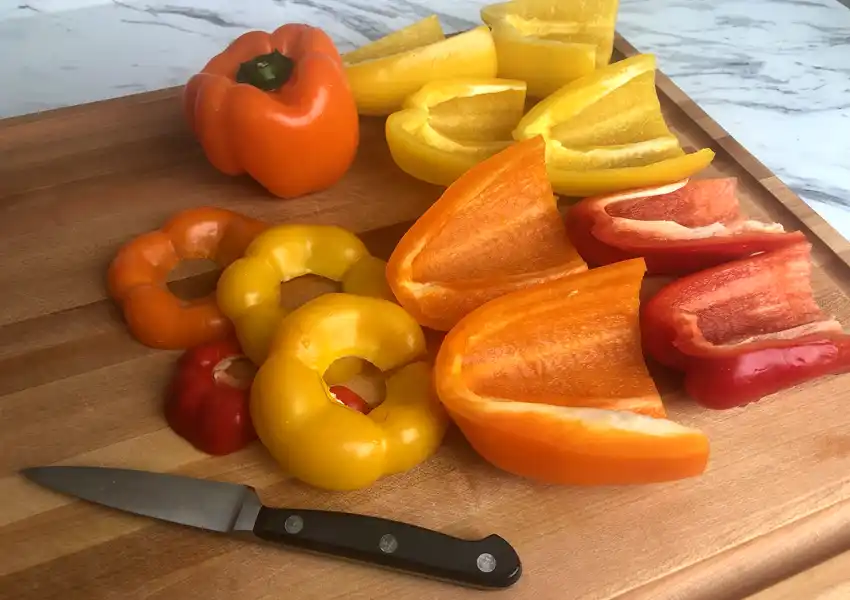
Dice the peppers into pieces approximately ¾ inch (about 2 cm) in size. Keeping the pieces a consistent size helps them dry evenly in the dehydrator.
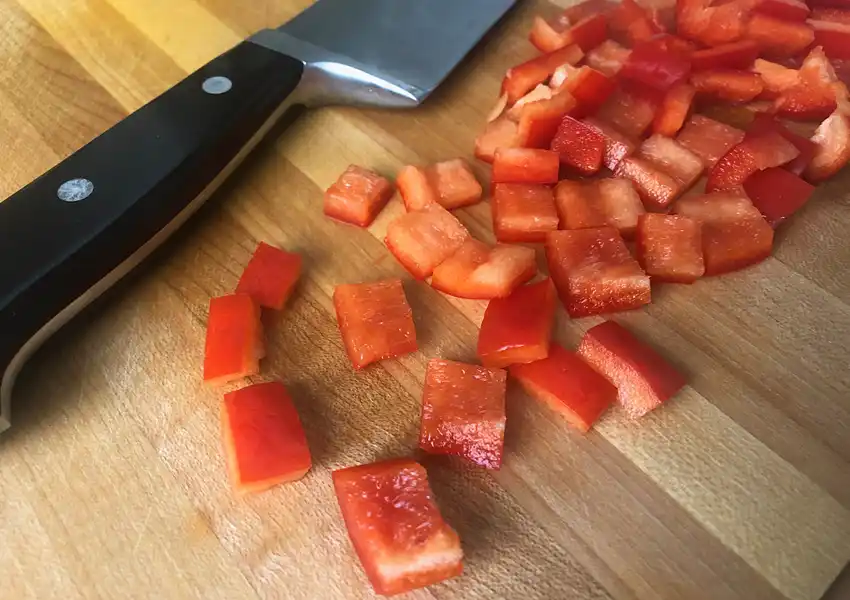
For this batch, the prepared peppers weighed 748 g (26 oz) before dehydration.
Step 2:
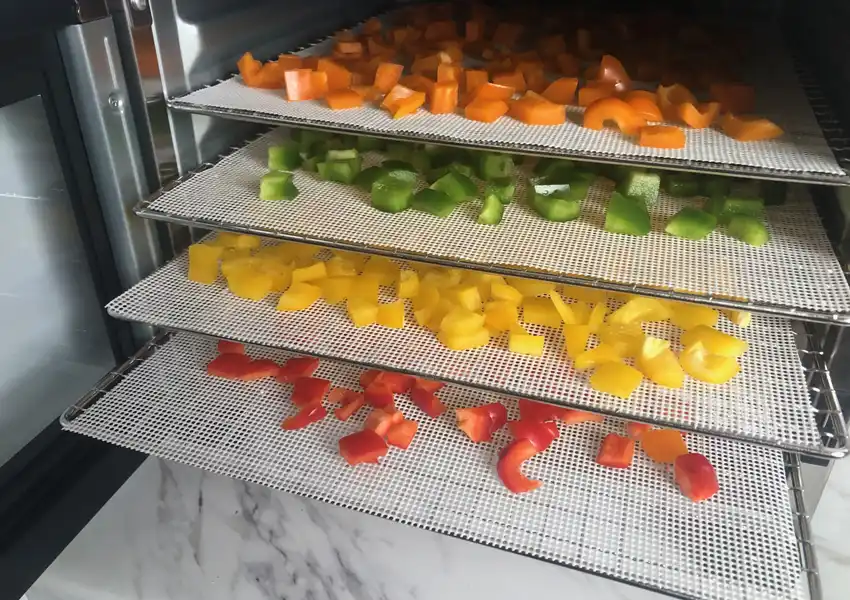
Spread the diced peppers evenly across dehydrator trays in a single layer. Avoid stacking or overlapping the pieces, as this slows drying and can cause uneven results.
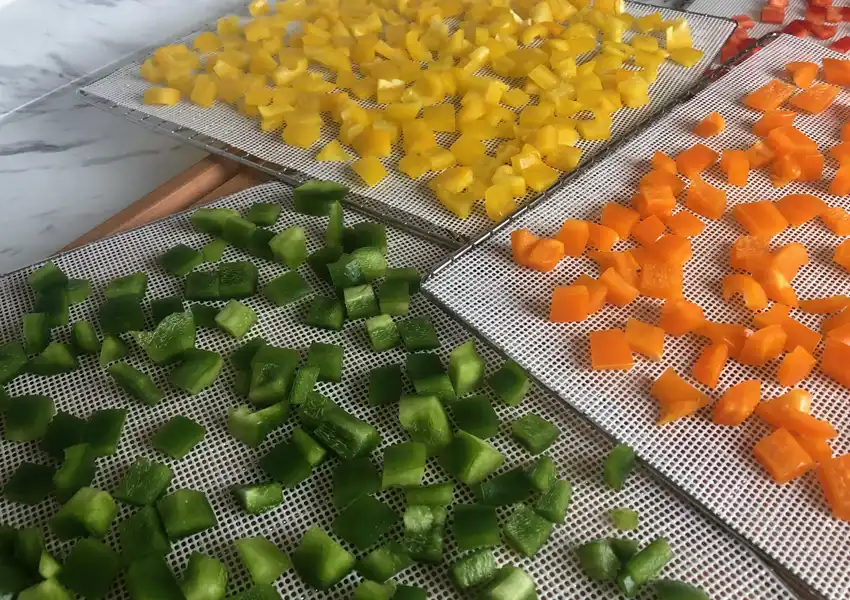
Leave small gaps between pieces so air can circulate freely around the vegetables.
Step 3:
If the peppers appear particularly juicy, line the dehydrator trays with parchment paper before placing the peppers on the trays. This can help prevent staining of plastic trays or silicone drying mats.
If the peppers are placed in the dehydrator soon after cutting, the rapid start of drying often reduces the amount of juice released and helps prevent staining.
Step 4:
Set the dehydrator temperature to 125°F (52°C), which is the standard drying temperature for most vegetables.
Dry the peppers until they are fully dehydrated. This typically takes 8–12 hours depending on humidity, airflow, and the moisture content of the peppers.
Step 5:
Check the peppers periodically during the drying process and rotate trays if needed to promote even drying.
Properly dried peppers should feel dry and slightly leathery with no visible internal moisture remaining.
Step 6:
Allow the peppers to cool completely at room temperature before storing them. Cooling prevents condensation from forming inside storage containers.
Once cooled, store the dehydrated peppers in airtight containers, vacuum-sealed bags, or freezer bags in a cool, dark location.
Recipe Notes
Batch size
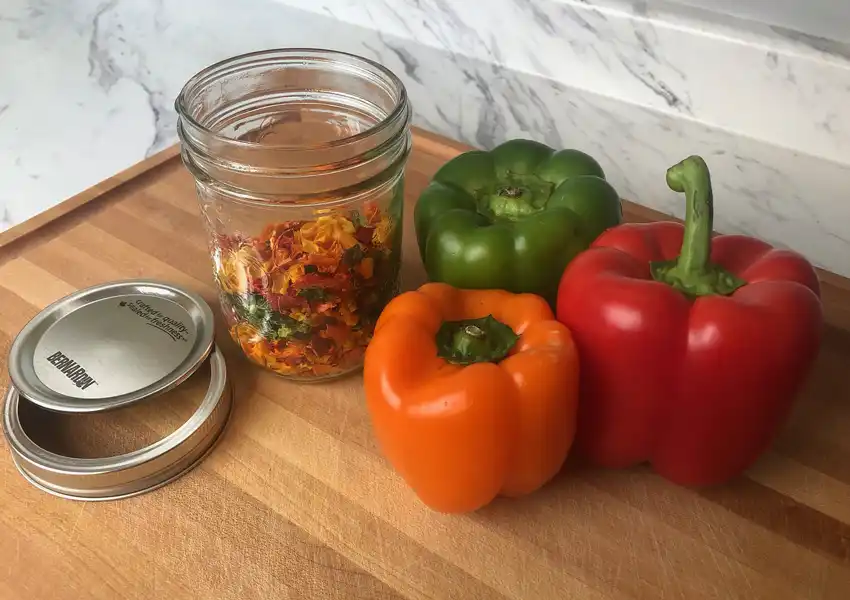
- This batch used 748 g (26 oz) of prepared bell peppers consisting of mixed colors including red, yellow, green, and orange peppers.
- Finished yield: After dehydrating, the peppers weighed 57 g (2 oz). This means approximately 691 g of water was removed during the drying process.
- Number of servings: Serving sizes are based on the fresh equivalent weight. A typical serving of bell peppers for trail meals is approximately 28 g (1 oz) fresh pepper. This batch produces about 27 servings.
- Dried serving size: Each serving equals approximately 2 g of dried peppers. This may appear small, but peppers lose most of their weight during dehydration because they contain a high amount of water.
- Rehydration: The peppers have a rehydration ratio of approximately 12:1. Each serving requires about 26 g (roughly 2 tablespoons) of water to fully rehydrate. In most backpacking meals the peppers can simply be added directly to the pot and allowed to soften while the meal cooks.
- Using dehydrated peppers in trail meals: Dehydrated bell peppers work well in many backpacking meals including rice dishes, pasta meals, soups, chili, couscous meals, and skillet-style dinners.
- Tray staining tip: Very ripe or juicy bell peppers can sometimes release enough moisture during the early stages of dehydration to stain plastic dehydrator trays or silicone drying mats. If the peppers appear particularly moist, consider lining the trays with parchment paper before placing the peppers on them. Another trick is to place the peppers in the dehydrator as soon as possible after cutting them. The rapid start of drying often reduces the amount of juice released and helps prevent staining.
- Storage: Store dehydrated peppers in airtight containers or vacuum-sealed bags in a cool, dark location. Properly dried peppers typically store well for 6–12 months, and longer if kept in the freezer.
- Further reading:Ultimate Guide to Dehydrating Food for Backpacking
Nutrition facts
Serving size 2 grams vegetarian Vegan gluten free lactose free
Per Serving
| Kcal: | 9 kcal |
| Fibers (g): | 0.7g |
| Sodium (mg): | 1mg |
| Carbs: | 2g |
| Sugar (g): | 1.4g |
| Saturated fat (g): | 0.1g |
| Proteins: | 0.3g |